

A flicker of the soul is all that is needed
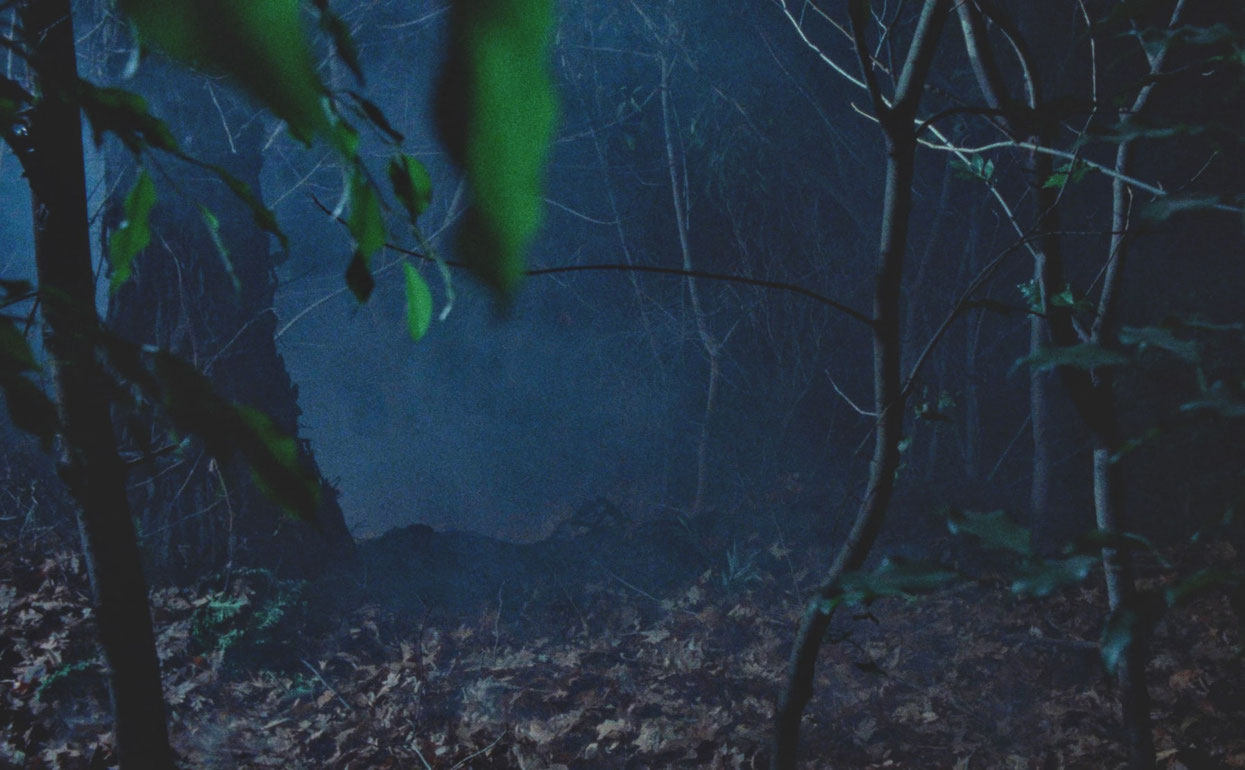

In horror movies, what is not shown is as impactful as what happens on screen. Tension is sustained by withholding information, letting the audience’s imagination fill in the gaps. The killer watches from afar, staking out his surroundings. Only then do they steadily move closer and closer, without revealing exactly who – or what – they are.
Rainer Kohlberger’s A flicker of the soul is all that is needed lingers on the verge of resolution, cross-cutting scenes from 1980s horror films to evoke an atmosphere of pervasive menace. The footage skips back and forth, as slow pans of houses, woods, and peripheral spaces repeatedly interrupt each other. An ominous soundtrack, composed in collaboration with Jung An Tagen, builds into a propulsive, pulsating rhythm, like a pounding heartbeat or the frantic inhalation of breath.
The imagery fades out before fixing upon a different sequence: trembling close-ups of bathrooms, hallways, a slick of blood seeping imperceptibly across wooden floorboards. The mirror-reflection of a half-seen figure is spliced with the tentative opening of a shower curtain. The montage dissolves into strobing, slow-motion footage of the victim desperately fleeing from the camera. When the denouement comes, in a climatic, violent crescendo, there is no moment of catharsis: instead, a frenzy of visual stimuli, overpowering and inscrutable, pours out in rapid succession and escalating intensity.
There is an unusual psychical effect that occurs through watching these distortions, juxtapositions, flickers and flashes. When held on the threshold of discernability, the spectator begins to perceive glimpses of vague forms and unexplained phenomena, photogenic hallucinations and residual after-images. They can almost comprehend the inexplicable. Then, before they know it, the scene abruptly shifts and they’re left grasping at shadows. (Chris Clarke)
A flicker of the soul is all that is needed
2027
Austria
77 min