

Pieces of My Father
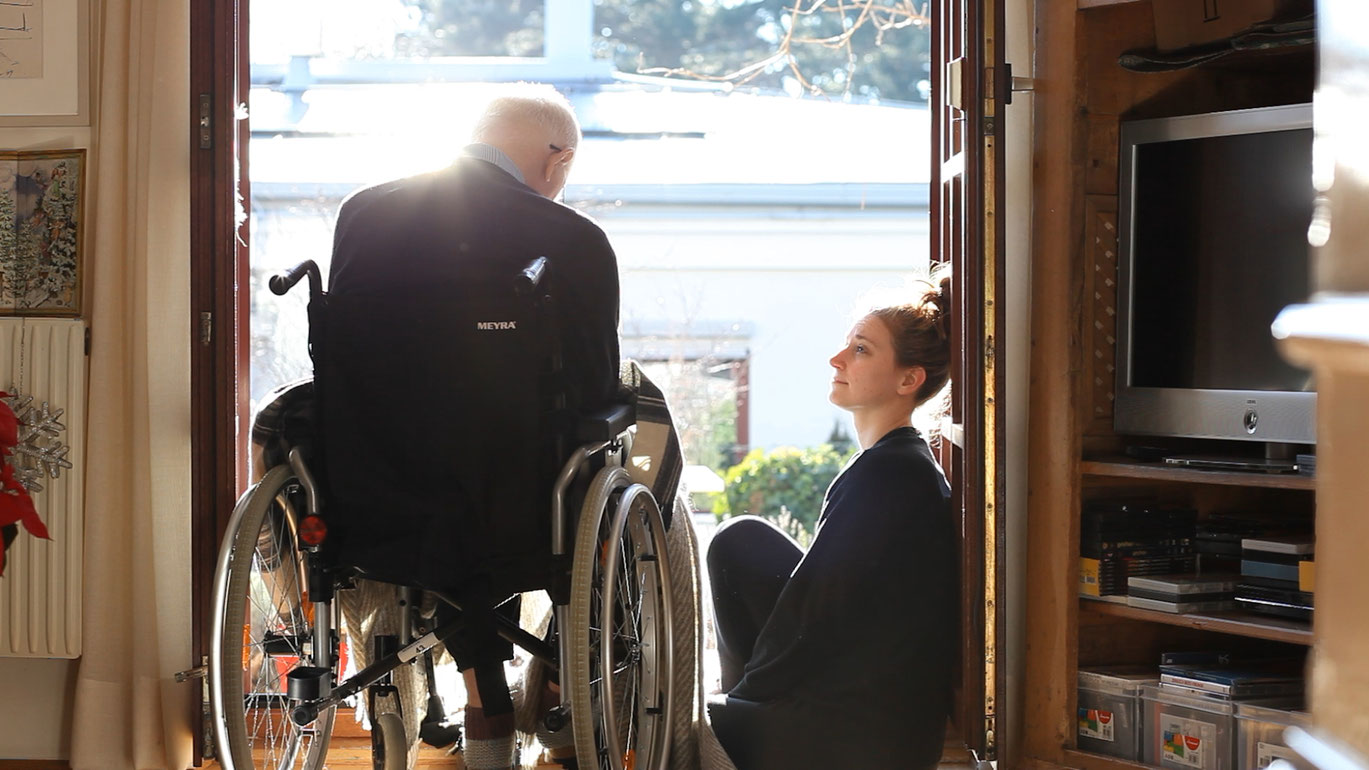
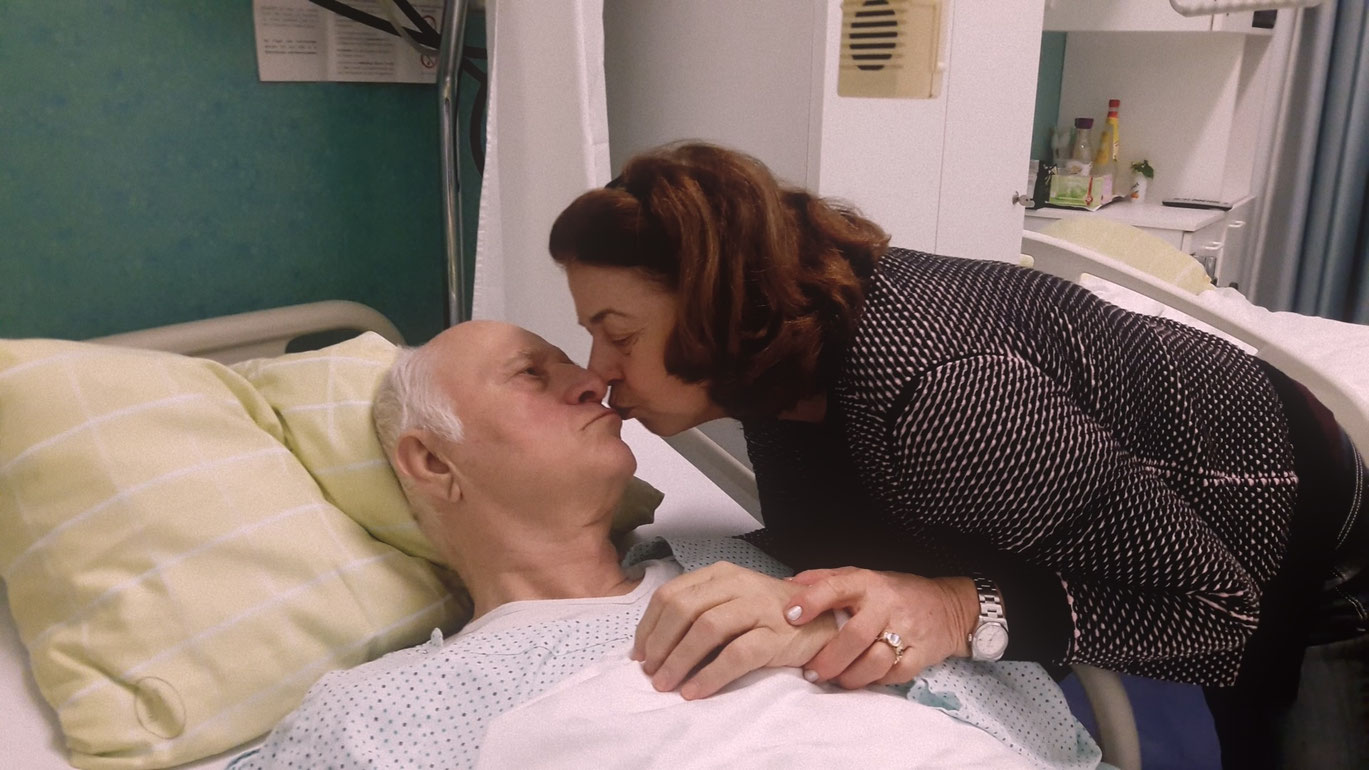
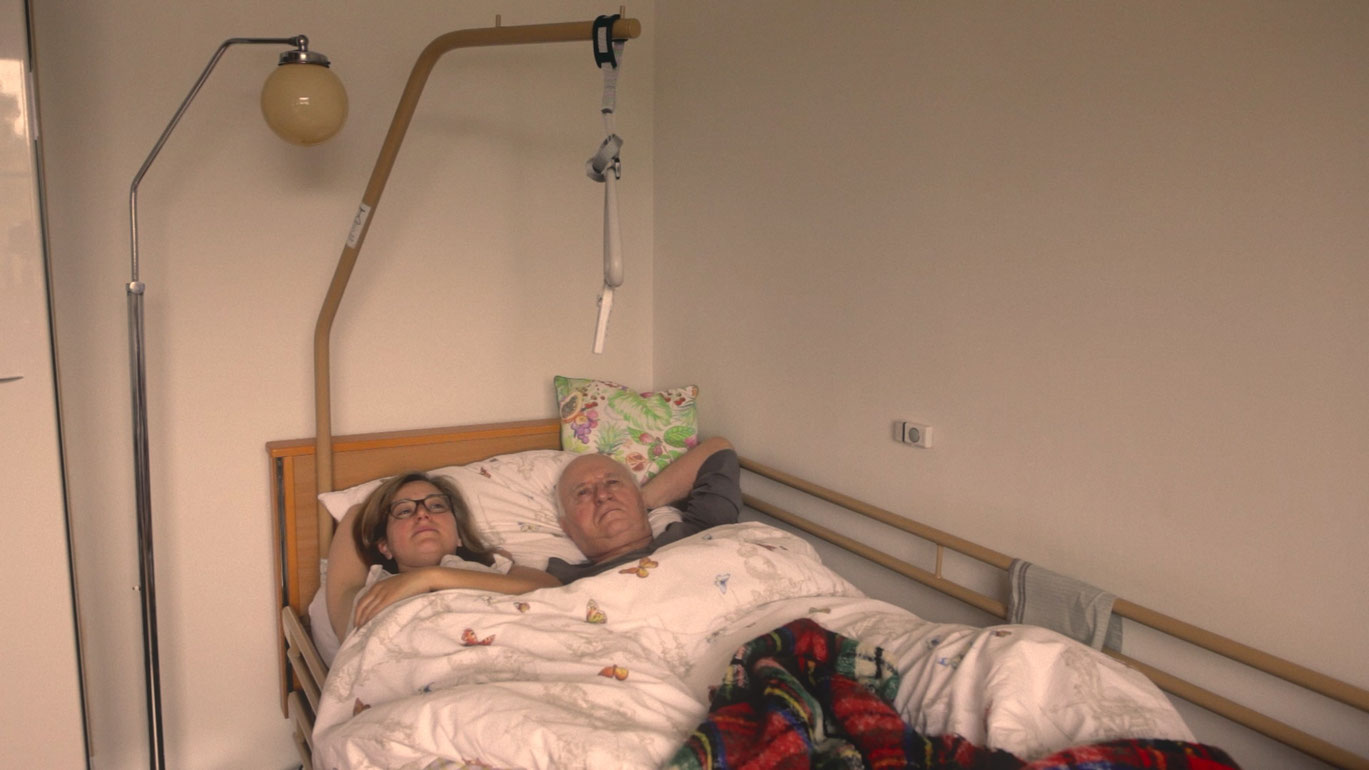
When her father, once the strong head of the family, becomes severely disabled after a stroke, Viki Kühn picks up the camera and begins a search for the past, the present, and what lies ahead. With a touch of humor, Pieces of My Father tells the story of a Viennese family struck by fate—grappling with it, despairing, slowly beginning to heal their wounds, learning to accept, confronting the act of letting go, and ultimately seeking to rediscover hope. (production note)
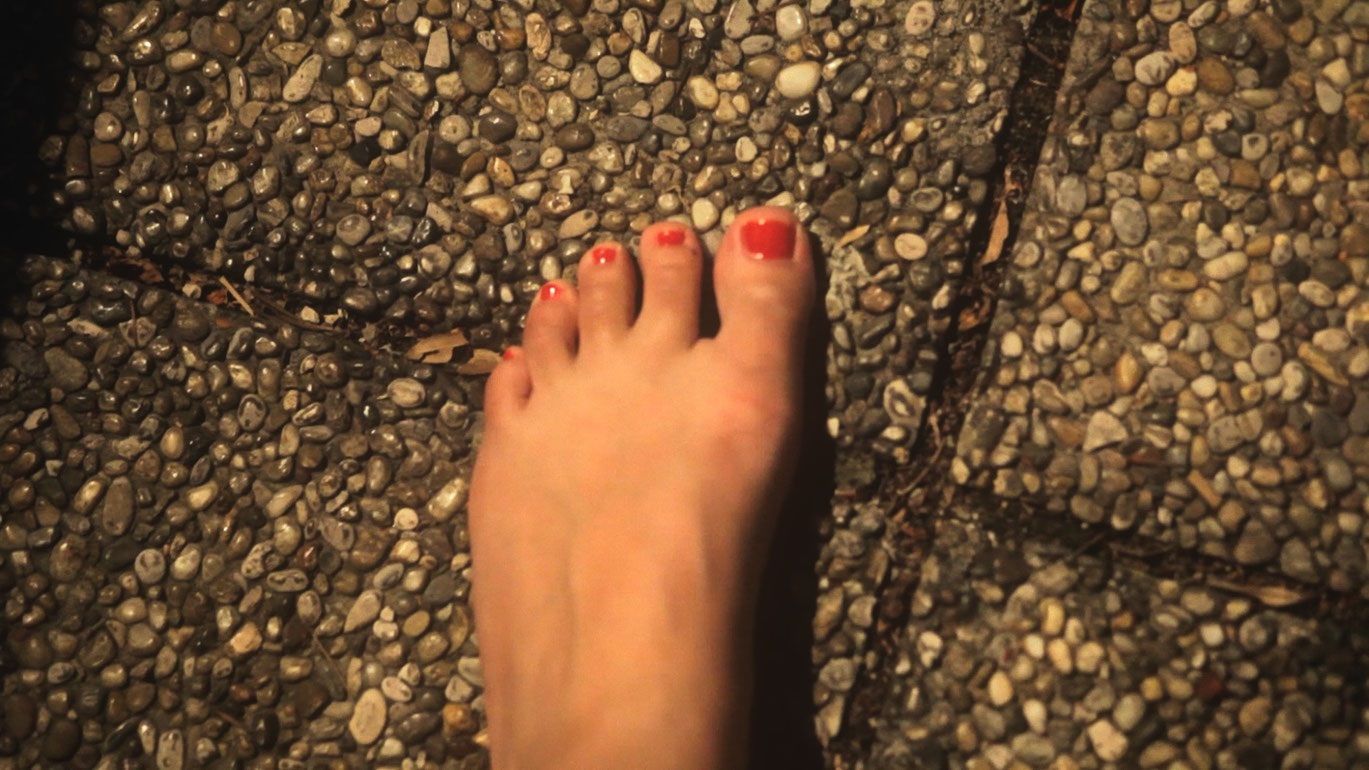
Immediately after her father suffers a stroke, Viki Kühn begins filming – first at the hospital, then at her parents’ home in Vienna. The family structure has been disrupted. Her father, paralyzed on one side, can no longer speak and his mobility is drastically limited; her mother assumes the role of caregiver and authority figure. In the dual role of daughter and filmmaker – and at times also as co-caregiver – Viki Kühn documents what has become everyday life: the challenges of morning routines, board games and family rituals, the burdens of physical suffering, the coexistence of powerlessness and normality. Kühn’s camera, sometimes static but mostly handheld, is more than a recording device. It creates distance while at the same time relentlessly striving for closeness. Repeatedly, as if through a sensory instrument, she attempts to create empathy with her father’s limited world, showing the perspective from his sickbed or finding moments of physical identification through tactile movements.
As a cinematic portrayal of a father and his family, Pieces of My Father is inextricably linked to self-portrait. The filmmaker’s own ambivalent feelings are given space: the grief over the loss of the former father figure, gratitude for the continued presence of the “half father”, the desire to hold on to him. At times, the presence of the moment is overlaid with sensual fragments of memory – for example when, in a voiceover, the filmmaker imagines herself returning to a protected state like that of childhood which then comes to a sudden end through a dramatic rupture. As the same routines repeat themselves – caregiving, family rituals, the annual Christmas celebration – periods of time seamlessly blend into one another. In the end, almost imperceptibly, eight years have passed. As the father becomes more frail and withdraws further into himself, the film finds its new focal point in the exhausted yet tirelessly active mother.
Although radically autobiographical, Pieces of My Father becomes a reflection that transcends the personal experience: on physical disability, family roles, and the changes that come with ageing. (Esther Buss)
Mein Halber Vater
2026
Austria
92 min
Documentary
German
English, AD (deutsch), SDH (deutsch)