

Leaving Light
In his story "When I Was Mortal", Javier Marías reflects on the absurdity that space continues to exist while time is erased for the living – or rather, is it that space preserves time within itself, but reveals none of its secrets?
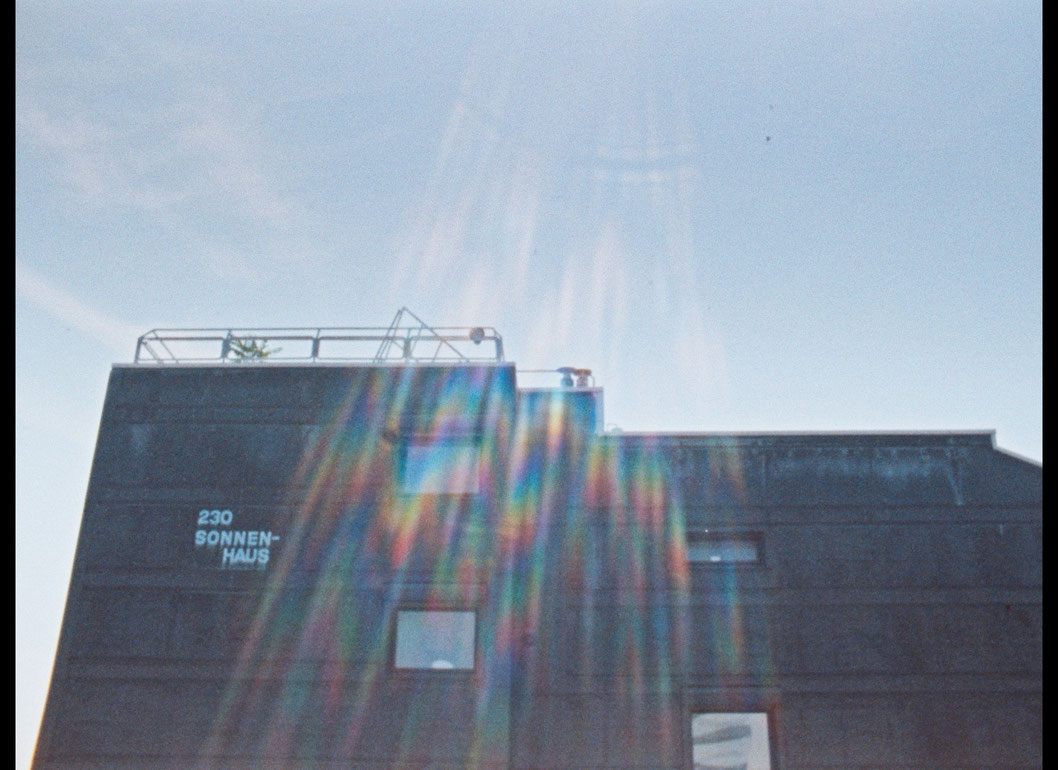
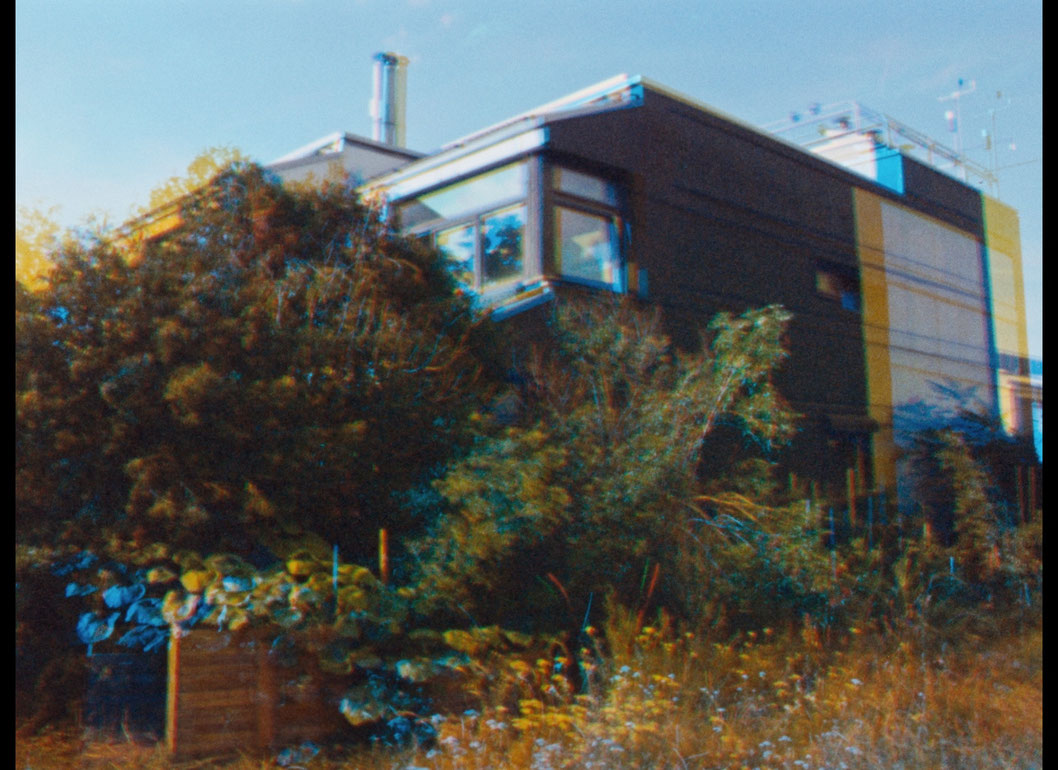
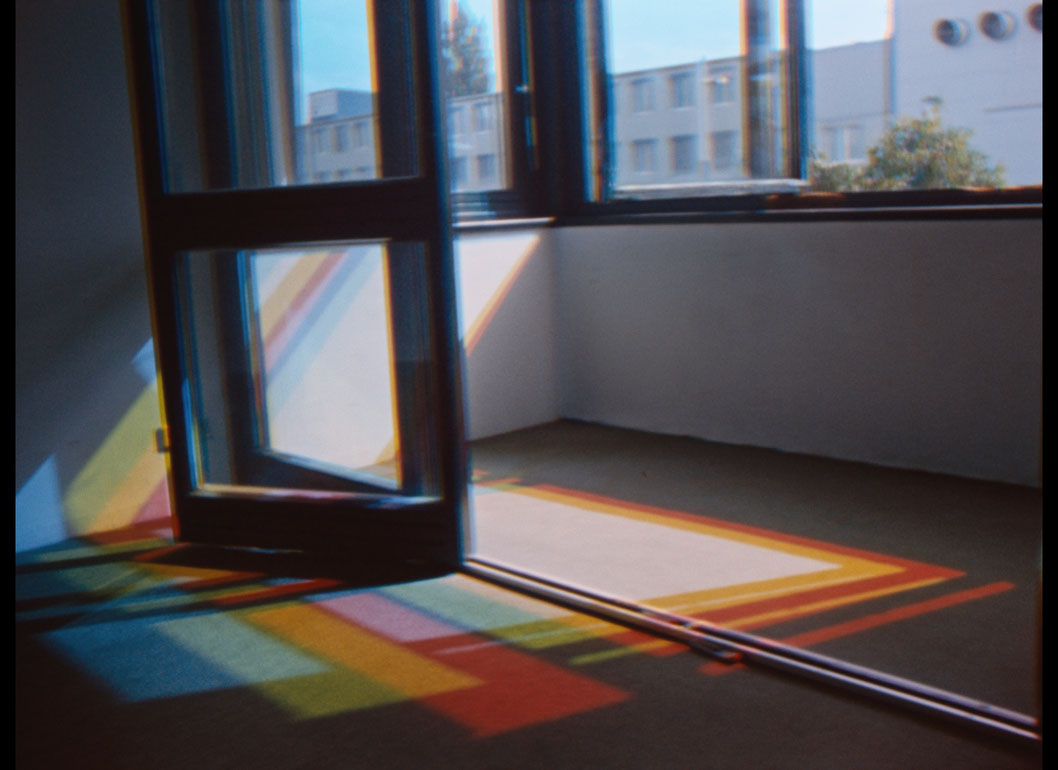
In Viktoria Schmid’s Leaving Light, empty spaces remain, as does the farewell light in the studio the author abandoned in the Sonnenhaus, an early research center for renewable energy. She takes something of this away with her, not only by capturing the light but also layering it and, together with the passing of time, fanning it out into a sense of Marías’s view of the deceased. It is a vision – like one presented to ghosts – to which everything at all times is visible simultaneously, something never before accessible to mortals.
Schmid achieves this simultaneity, capable of animating light, time, and space into an eerie trembling, with her previously utilized method of successive multiple exposures. Each one is filtered with a different color, directly in the camera – an allusion to the historical Technicolor process in which three simultaneously exposed strips of film were subsequently joined together to create a seamless image.
Many aspects of Schmid’s work unravel thanks to her fruitful use of that astonishing 19th-century invention by which a film is pulled through a mechanical mechanism, paused 24 times per second, exposed, and advanced further. In controlled framings, with a single small 16mm roll cut in the camera, Leaving Light gives free rein to the interplay of elements: the small irregularties generated by machine and hand, the gently oscillating image position, and the un/intentional movement of the camera and filters. In this way the material-bound image is miraculously lifted into a disembodied state of suspension. (Thomas Korschil)
Translation: John Wojtowicz
Leaving Light
2026
Austria
3 min